KAAPU AI
A health app for the moment you cannot speak, type, or ask for help.
At 2am, living alone as an international student, I had an asthma attack bad enough that I could not speak or call anyone. Kaapu is the app I needed that night. A voice first health companion for people living alone with chronic illness, built solo in four months. It runs as a web app on both platforms, with the full Android build in limited testing.
Role
Solo founder,
designer and builder
Scope
Voice UX, iOS and Android UI
Design Systems, 3D interaction
Timeline
4 months
PROBLEM
How might we capture what someone is experiencing at the exact moment they have the least capacity to tell us?
A patient uses fourteen tools and none of them talk to each other. They lose over 200 hours a year to searching, tracking and logging, wait weeks to be seen, and their family only find out after the worst has passed.
Who Kaapu is for

Jack Joseph, 27

Masters student in London
Asthma patient
Manages it alone, day to day
GOALS
Get help fast when an episode starts
Stop losing the detail between appointments
Be understood without rehearsing his history
FRUSTRATIONS
Fourteen tools that do not talk to each other
Two hours a week piecing answers together from forums and chatbots
Family only find out after the worst has passed
TODAY HE
Rides out episodes alone, then tells people after
Waits one to three weeks to be seen
Spends 200 hours a year searching, tracking and logging
"Nobody holds the interval. Everything I know about my own condition lives in fourteen places and none of them talk to each other."
Every existing tool tells responders who the patient is
Kaapu tells them what has been happening.


STRONG EMERGENCY RESPONSE
NO EMERGENCY RESPONSE
KNOWS NOTHING DAY TO DAY
FULL DAY TO DAY CONTEXT
Personal systems
Alarms, cords, buttons
MedicAlert
Bracelet
NHS SCR
Static records
Apple
Emergency SOS
Wearables
Fitbit, Apple
Kaapu
Live context, not identity
SystmOne
GP side only
Evergreen Life
Admin tool
Dr.IQ
Appointments, scripts
Apple Health
Passive tracking
Bearable
Daily logging
Human
Health AI, no SOS
STRONG EMERGENCY RESPONSE
NO EMERGENCY RESPONSE
KNOWS NOTHING DAY TO DAY
FULL DAY TO DAY CONTEXT
Personal systems
MedicAlert
NHS SCR
Apple
Wearables
Kaapu
Live context, not identity
SystmOne
Evergreen Life
Dr.IQ
Apple Health
Bearable
Human
A night with a severe episode
01
Symptom starts
Wakes at 2am already struggling to breathe
02
Reaches for help
Unlocks the phone, opens contacts
03
Cannot explain
No way to say what is happening or how bad it is
04
Waits it out alone
Decides against an ambulance, rides it out
05
Tries to recall later
Describes it to a GP days afterwards


My own 2am attack. I could not speak, and speaking was the one thing the phone needed.
Over 50 people in chronic illness communities described this unprompted when asked.
Why the GP summary exists. The interval is the part nobody is holding.
HIGHER IS BETTER


HIGHER IS BETTER
Symptom starts

Wakes at 2am already struggling to breathe
Reaches for help

Unlocks the phone, opens contacts
Cannot explain

No way to say what is happening or how bad it is
My own 2am attack. I could not speak, and speaking was the one thing the phone needed.
Waits it out alone

Decides against an ambulance, rides it out
Over 50 people in chronic illness communities described this unprompted when asked.
Tries to recall later
Describes it to a GP days afterwards
Why the GP summary exists. The interval is the part nobody is holding.
SOLUTION
Let people speak when they can, and ask nothing of them when they cannot.
I took the question back to chronic illness communities. People did not want to log a mood every day, they wanted somewhere to turn when something happened. So capture became automated and voice led, triggered by the episode rather than the calendar, with everything after it held in one timeline.
One place that holds the interval
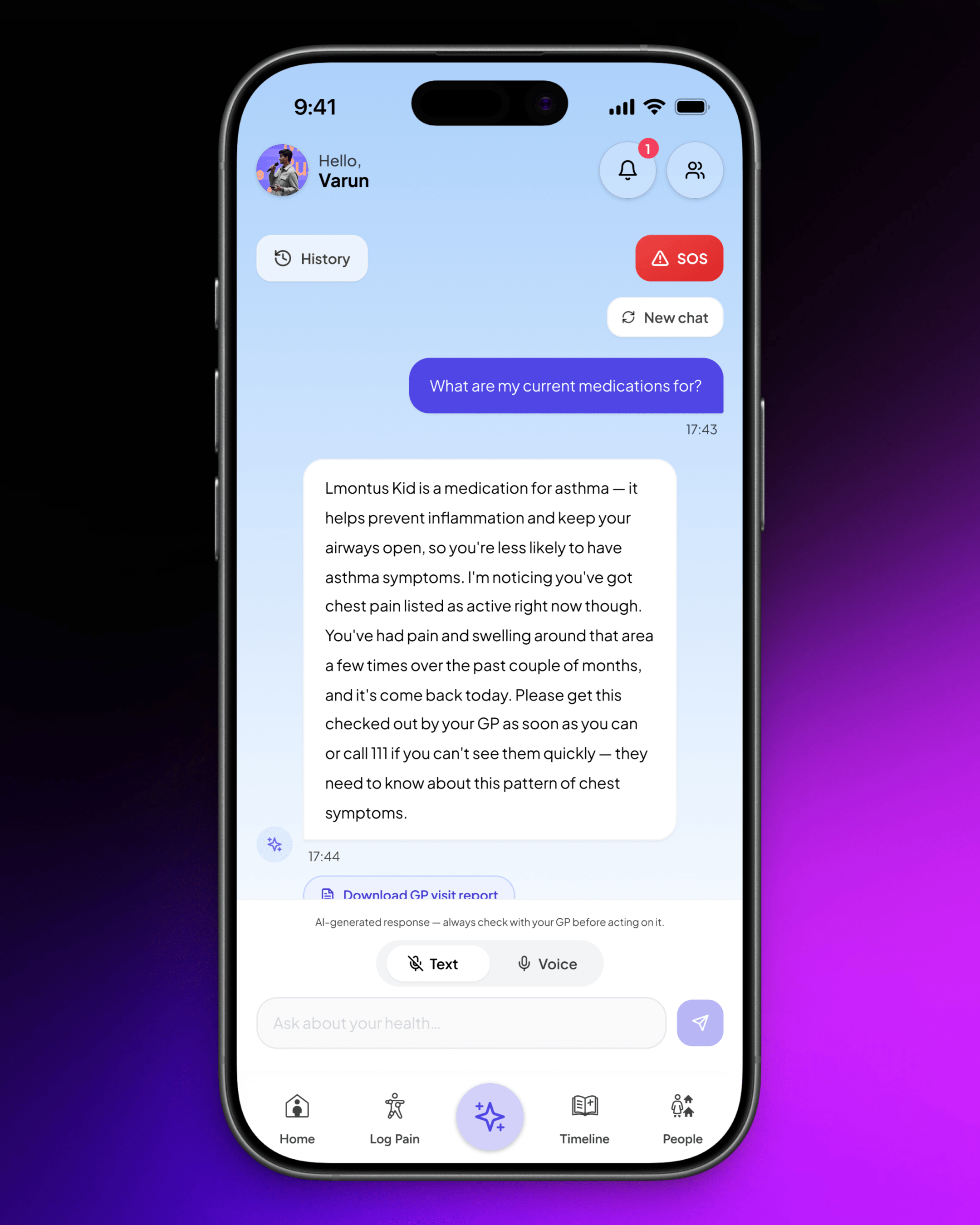
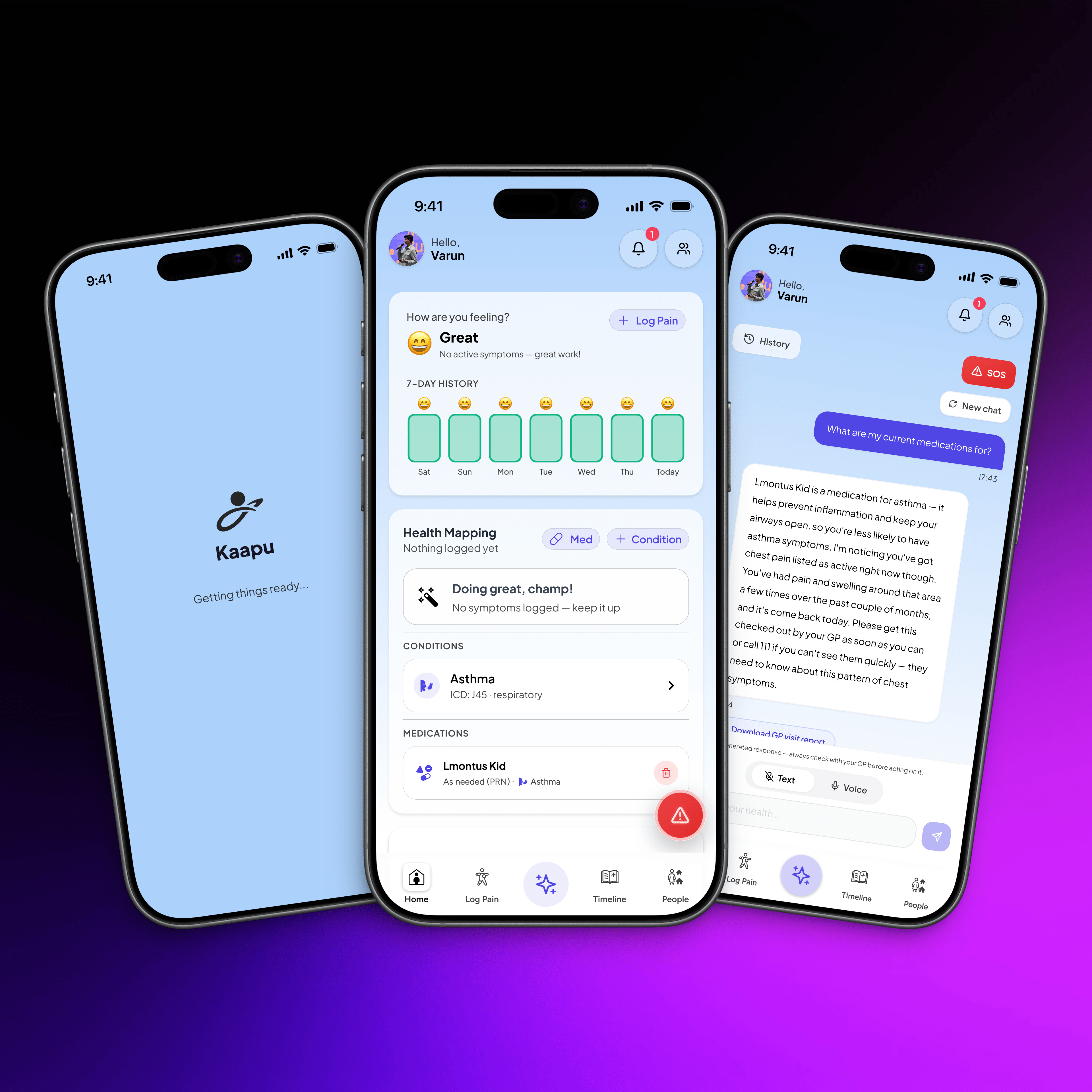
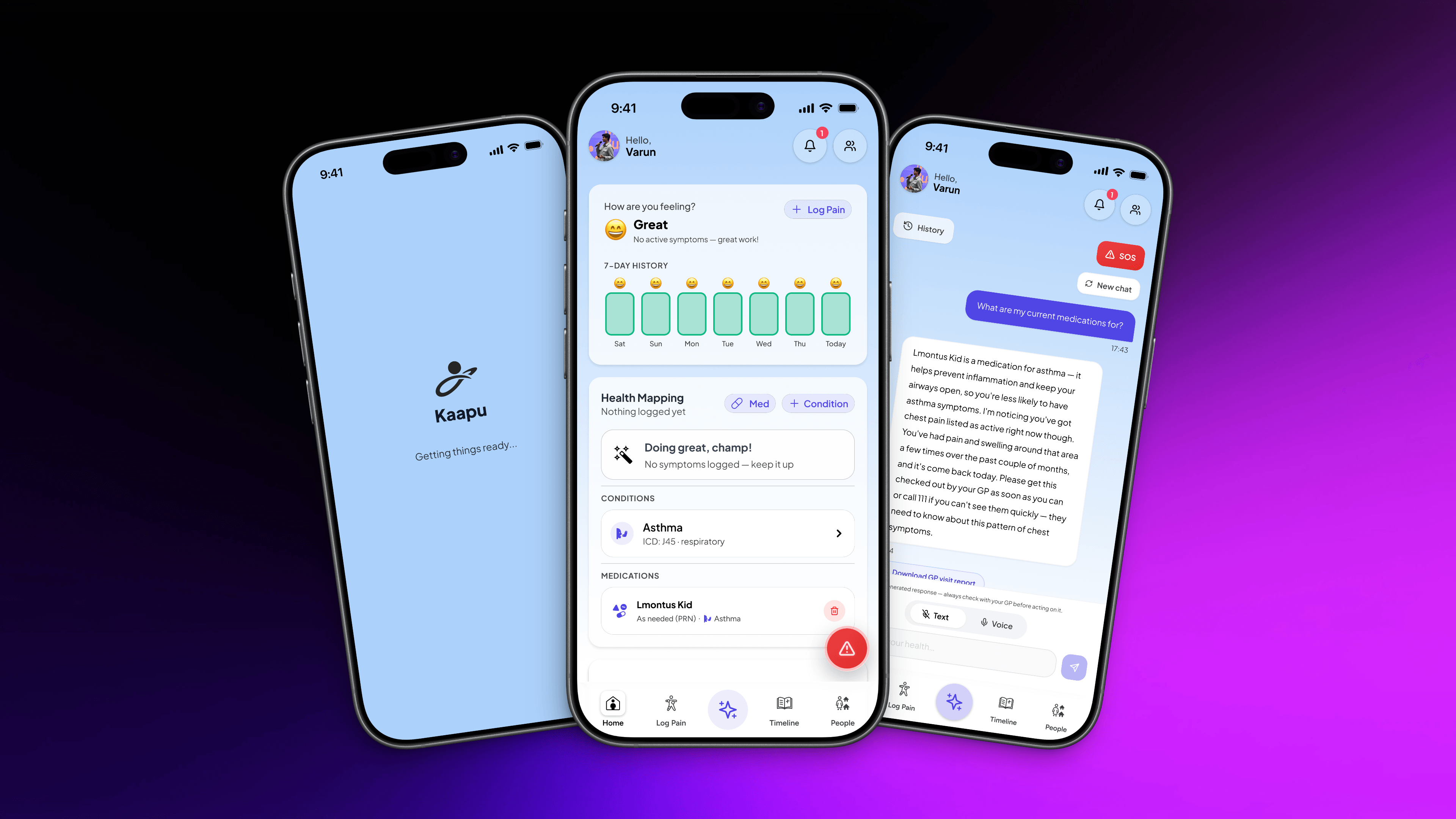
Say It Once and It Logs Itself
Voice capture runs the whole entry, tolerating pauses and half sentences
It writes symptom, severity and time into the record with no form
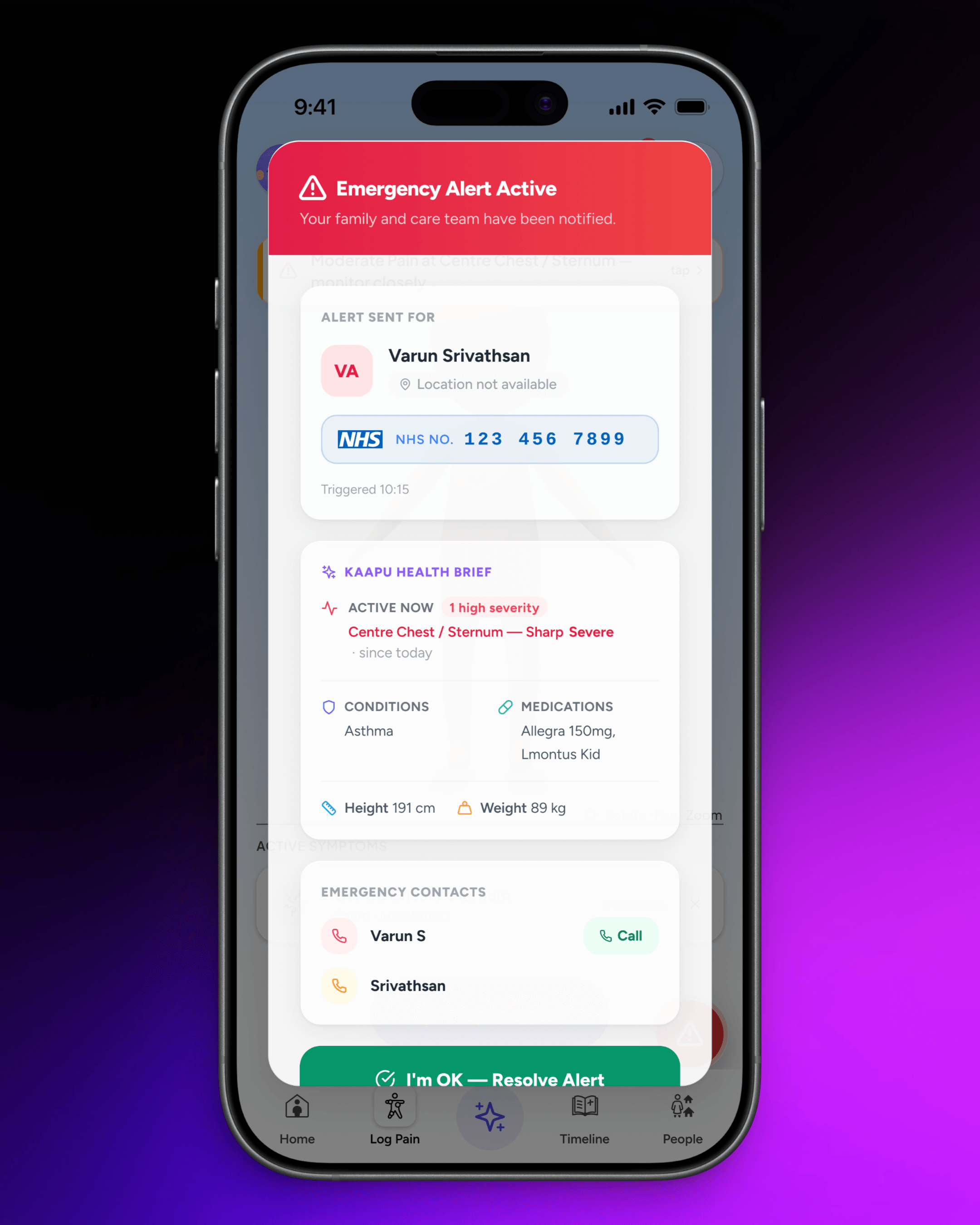
One Button, Everyone Told
SOS never sits behind a paywall or a menu
One press alerts emergency contacts and care teams at once, with location and the episode attached
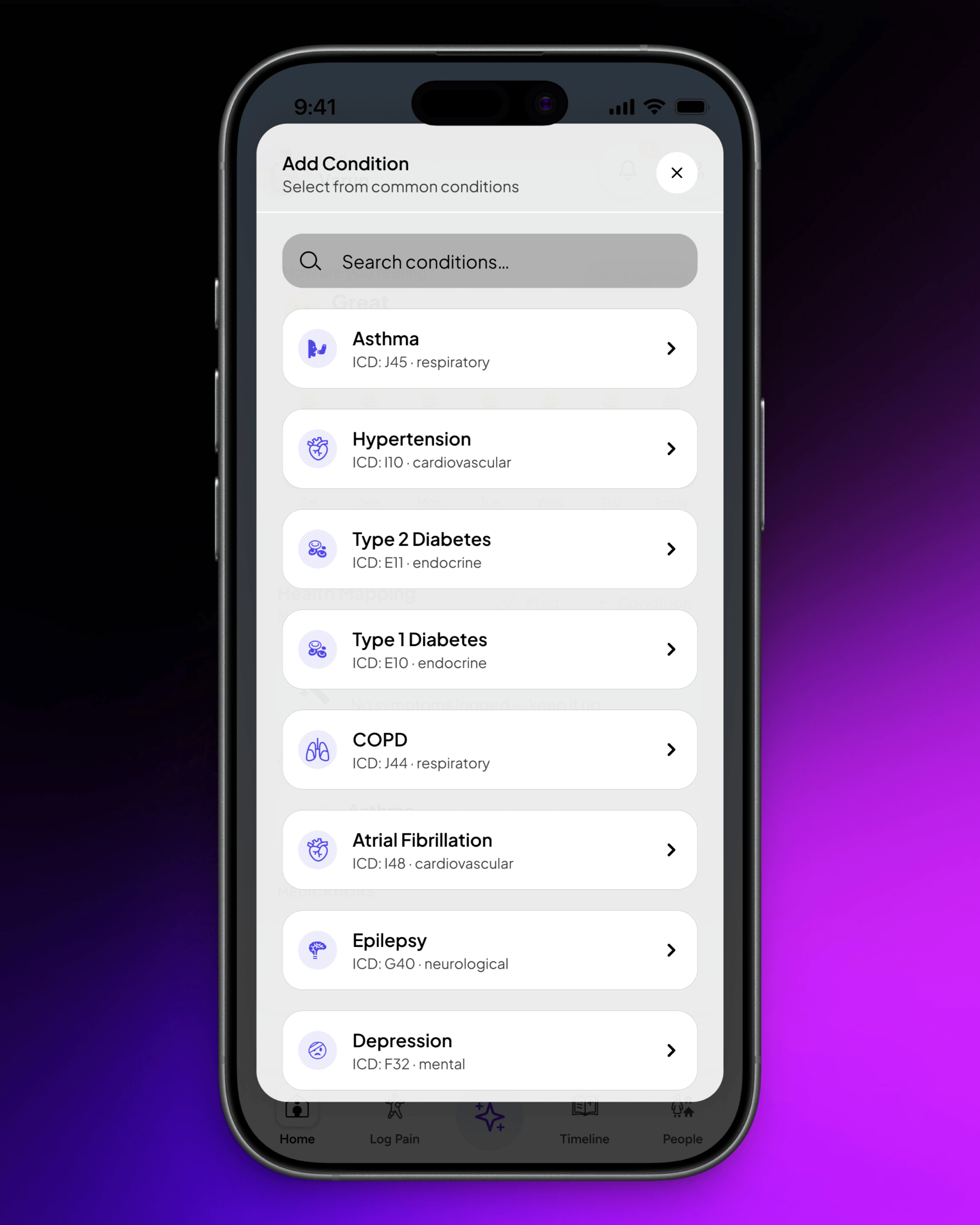
Icons Built to Read Mid Episode
Generic health glyphs are ambiguous when you are panicking
A custom set for body regions, symptom types and alert states, readable at arm’s length
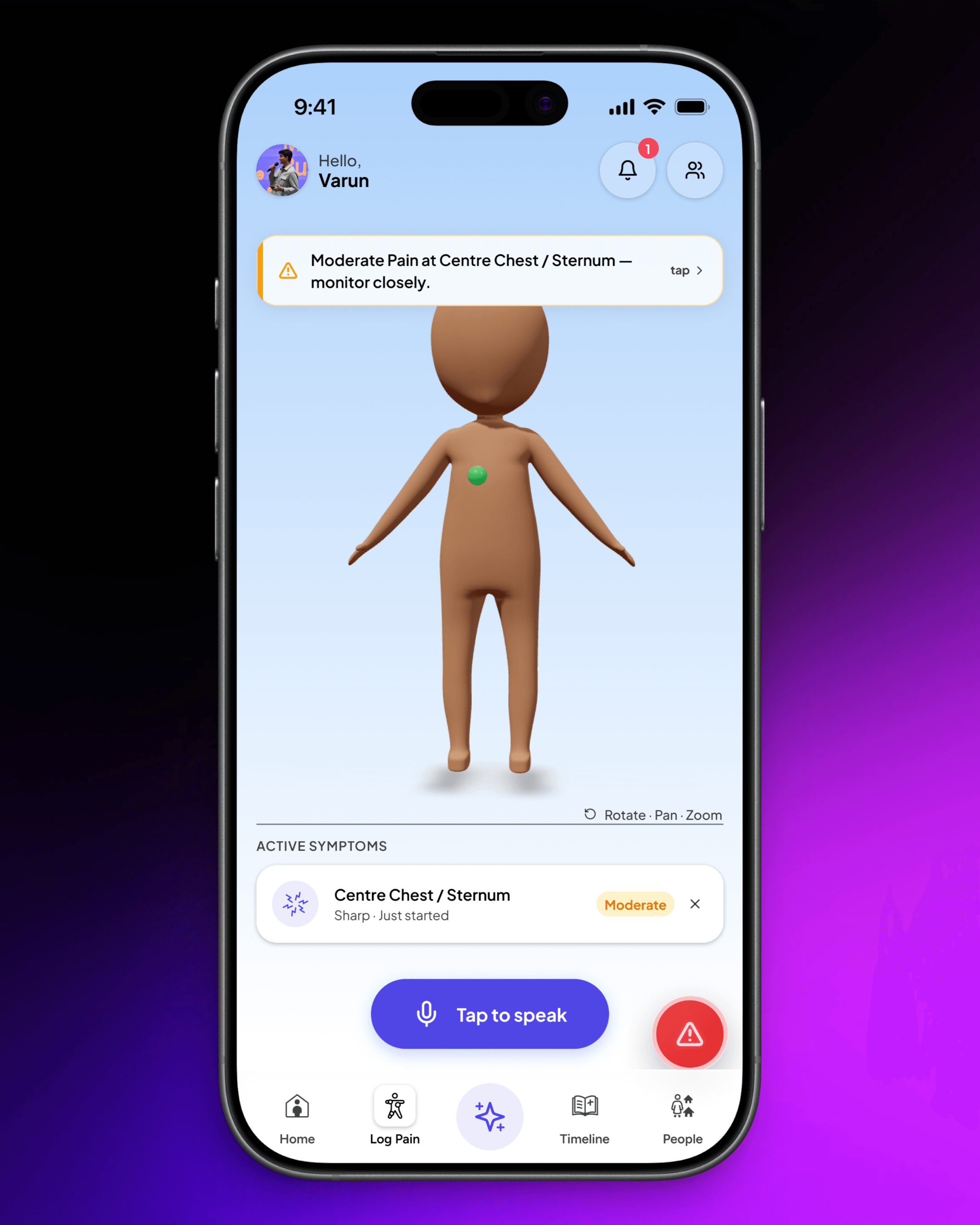
Everything in One Timeline
Symptoms, prescriptions and reminders land in one thread with the 3D body map
The record builds itself, rather than being assembled before an appointment
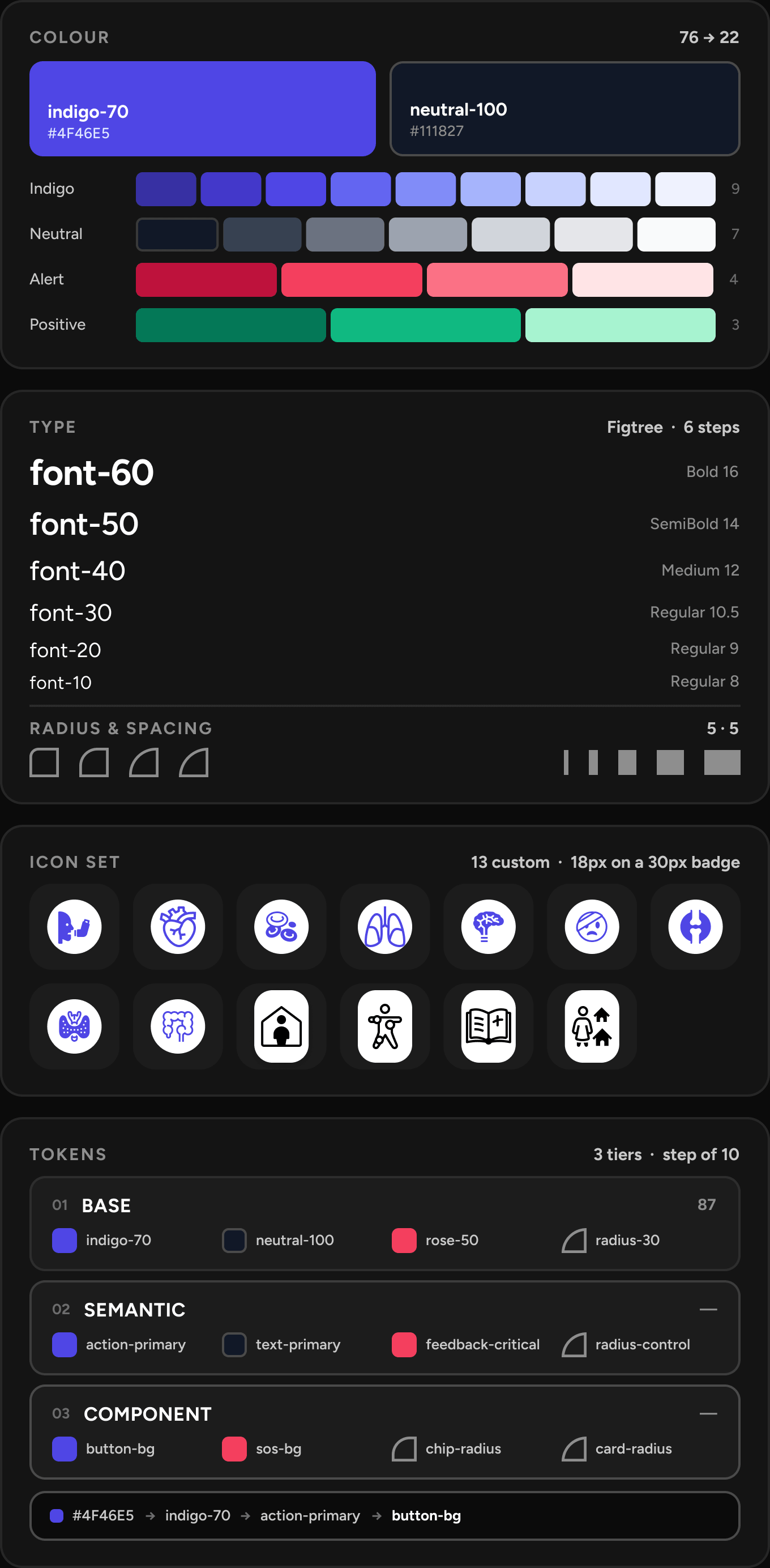
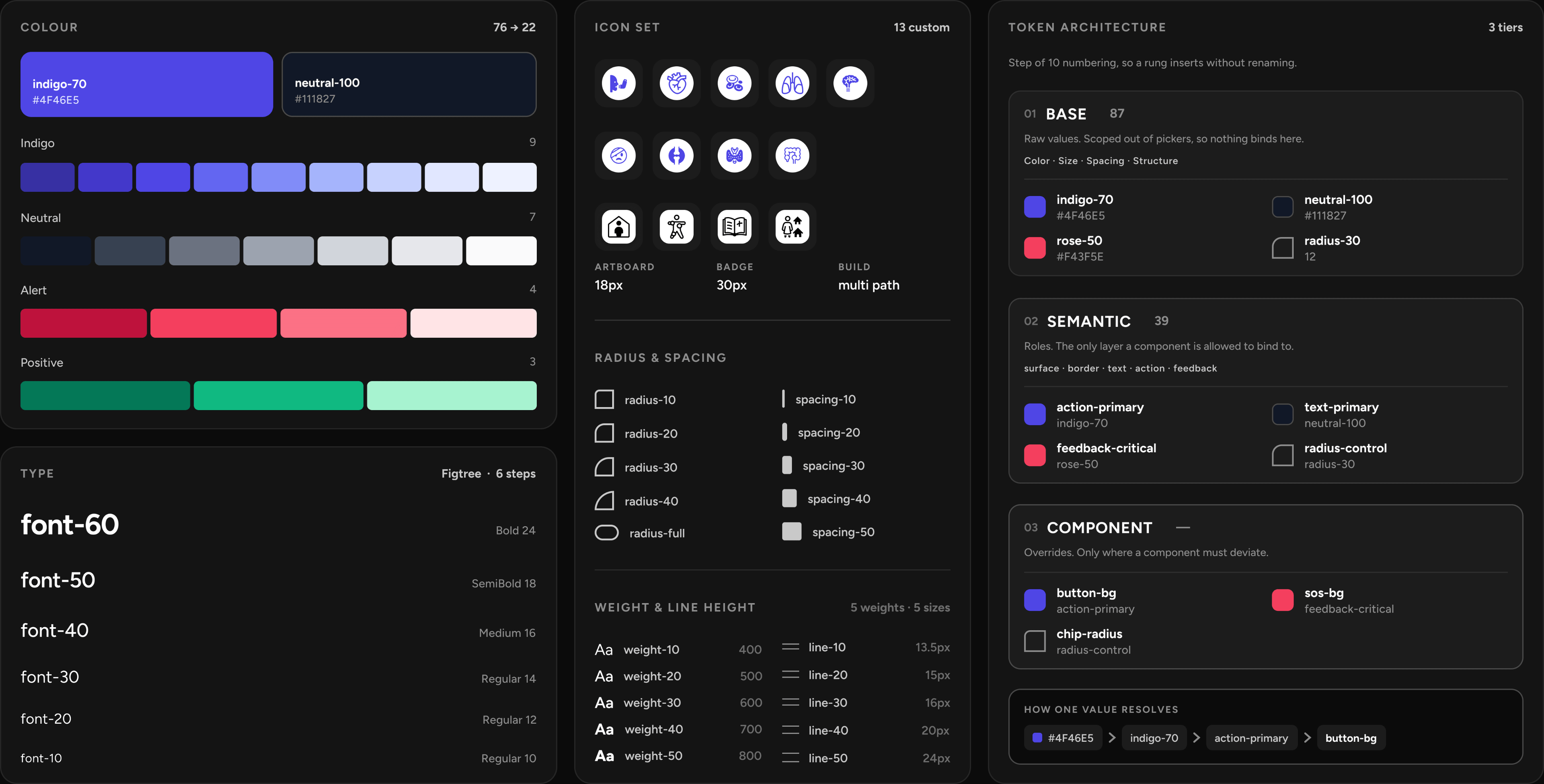
DESIGN SYSTEM
One component library shared by design and development, so the two never drifted apart.
I designed and built the app, so the library had to hold as a Figma file and as code at the same time. Tokens carried named values straight into the build instead of measurements lifted off a screen, which is what stopped the two drifting. Voice and alert states are first class components rather than afterthoughts, the icon set is custom because body regions and symptom types have no reliable stock equivalent, and every pairing was checked to WCAG AA.
LOW-FI
The pivot, across eight rounds.
The wireframes are where the product changed shape. Across roughly eight rounds it went from asking people to come to the app every day to asking nothing until something is wrong.
From daily tracker to voice first, shaped by user feedback
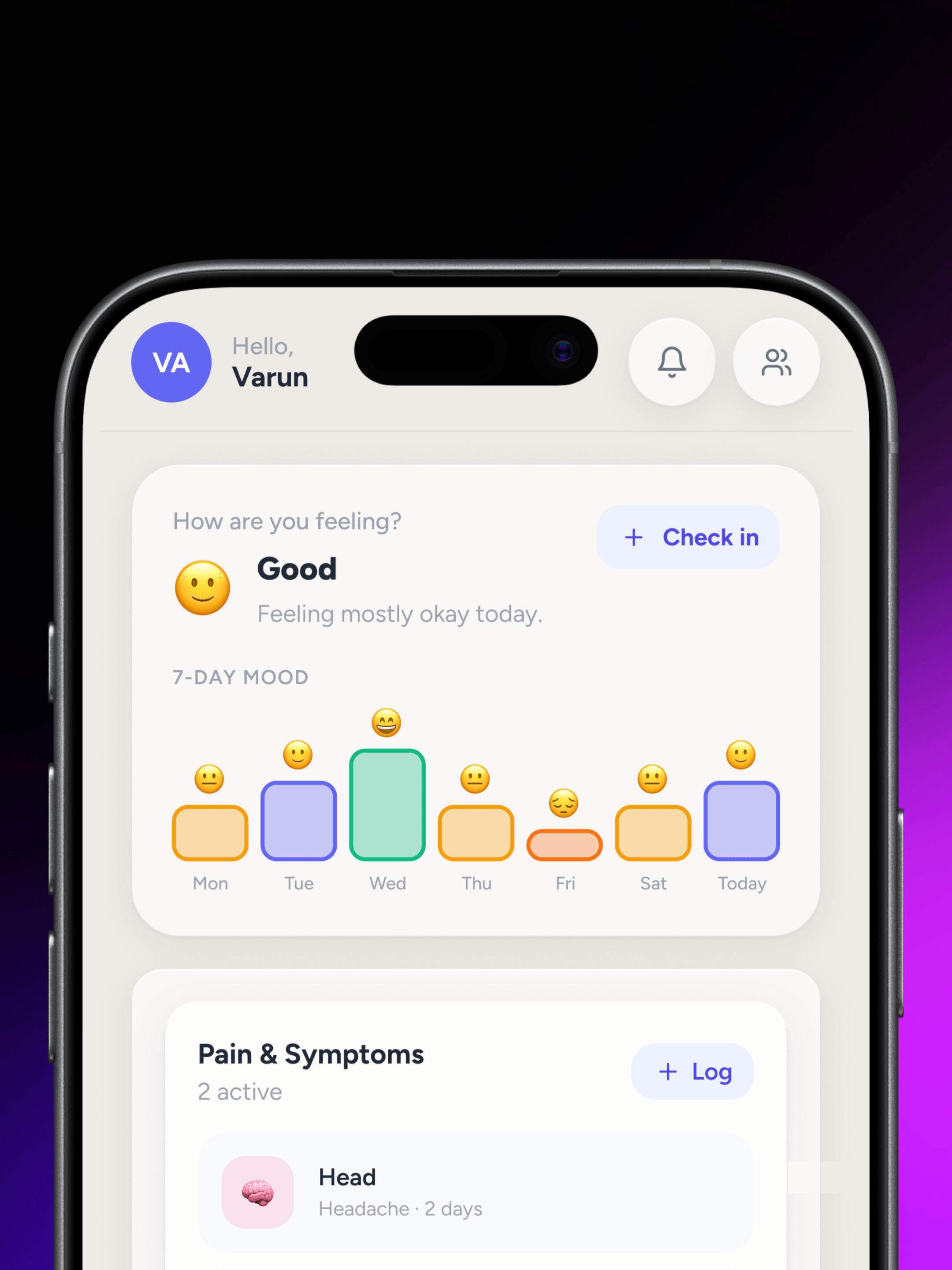
Log every day
Asked for a mood entry every day, whether or not anything had happened

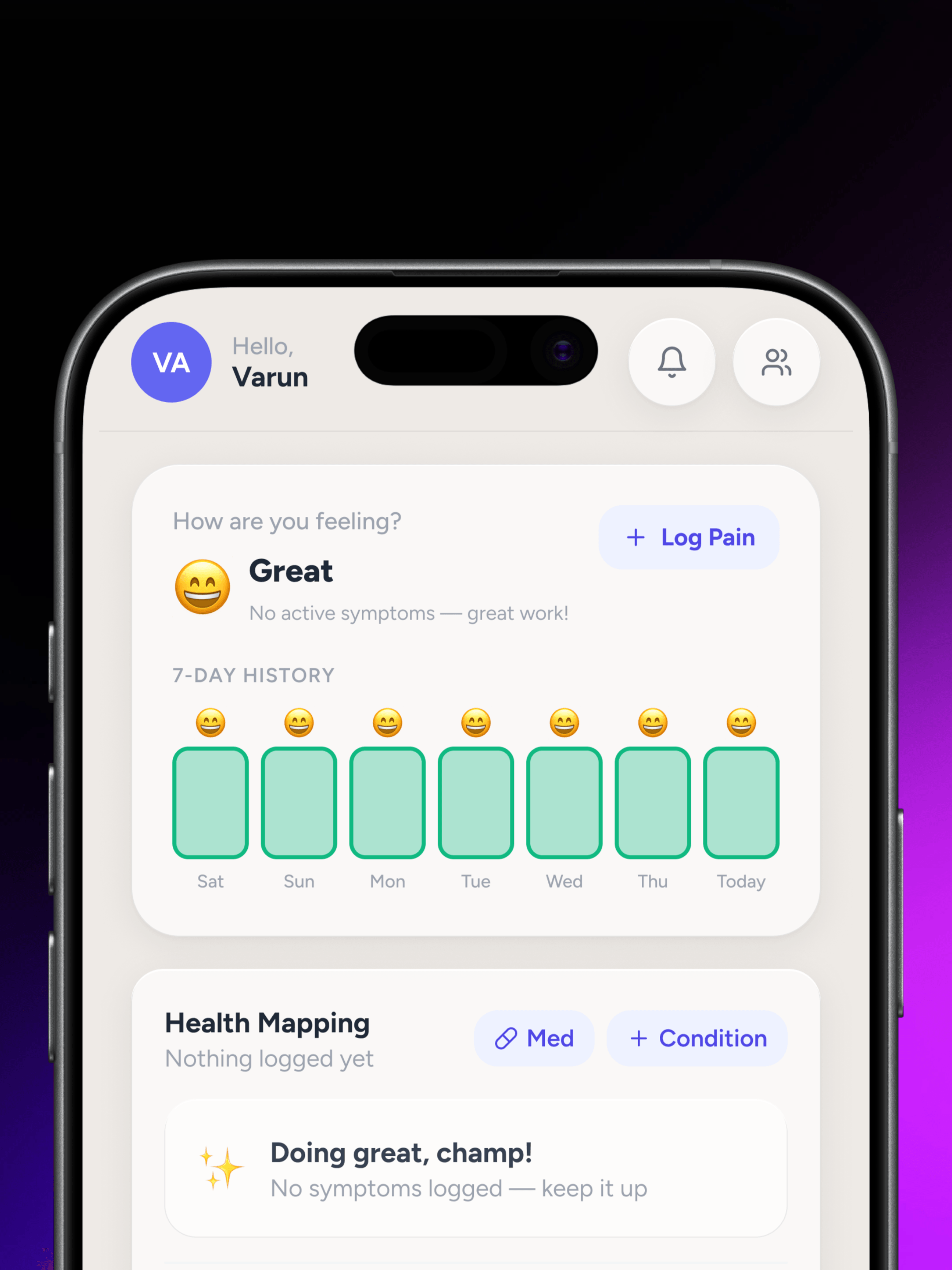
Green by absence
Everything read green because nothing was logged. An empty week and a good week looked identical
The dashboard was reporting a false positive. It reflected our data gap, not the patient
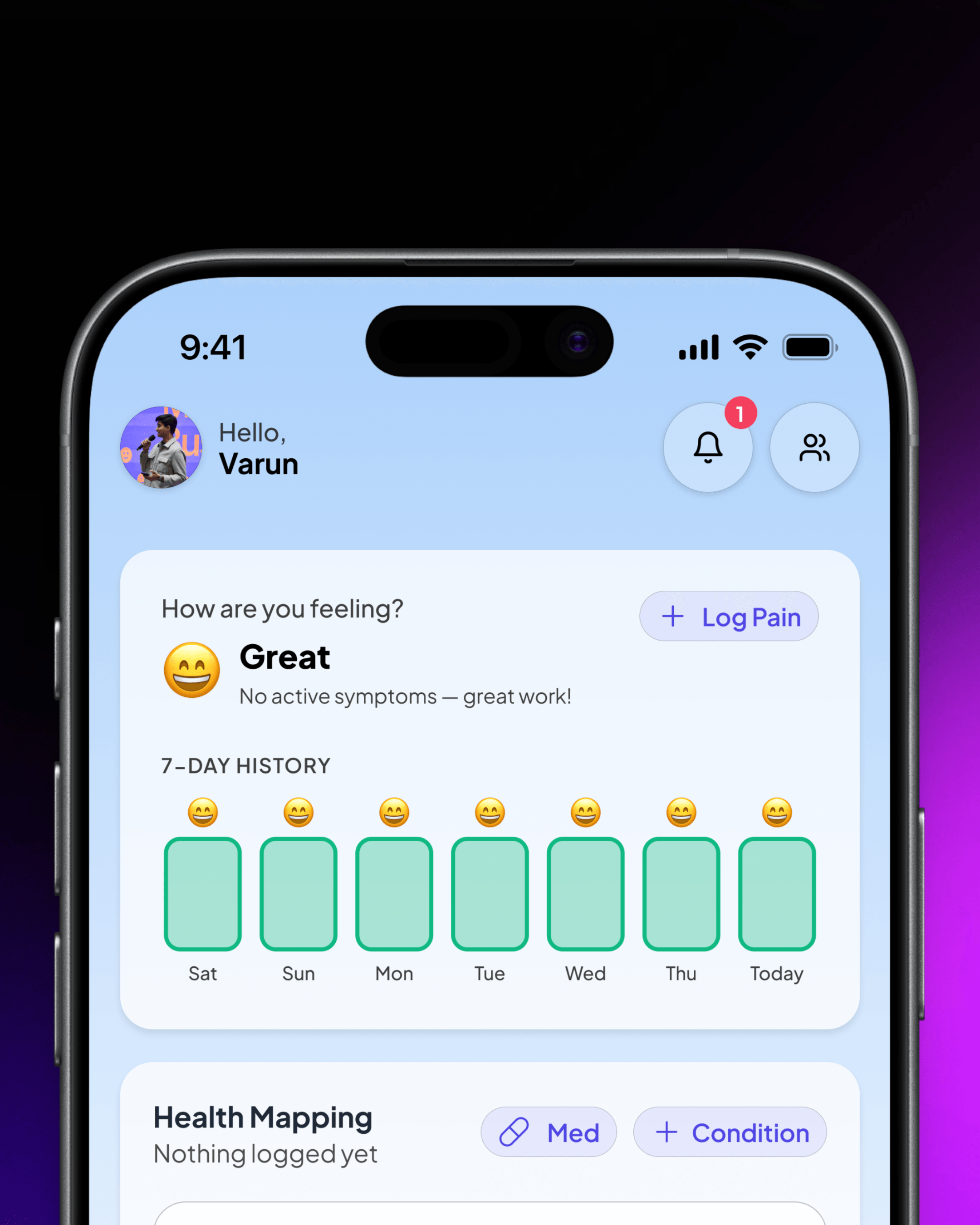
Green unless you log pain
One press to speak. No form, no scale, nothing to keep up daily
Usage grew. People came back when they were unwell instead of dropping off from logging every day
HI-FI
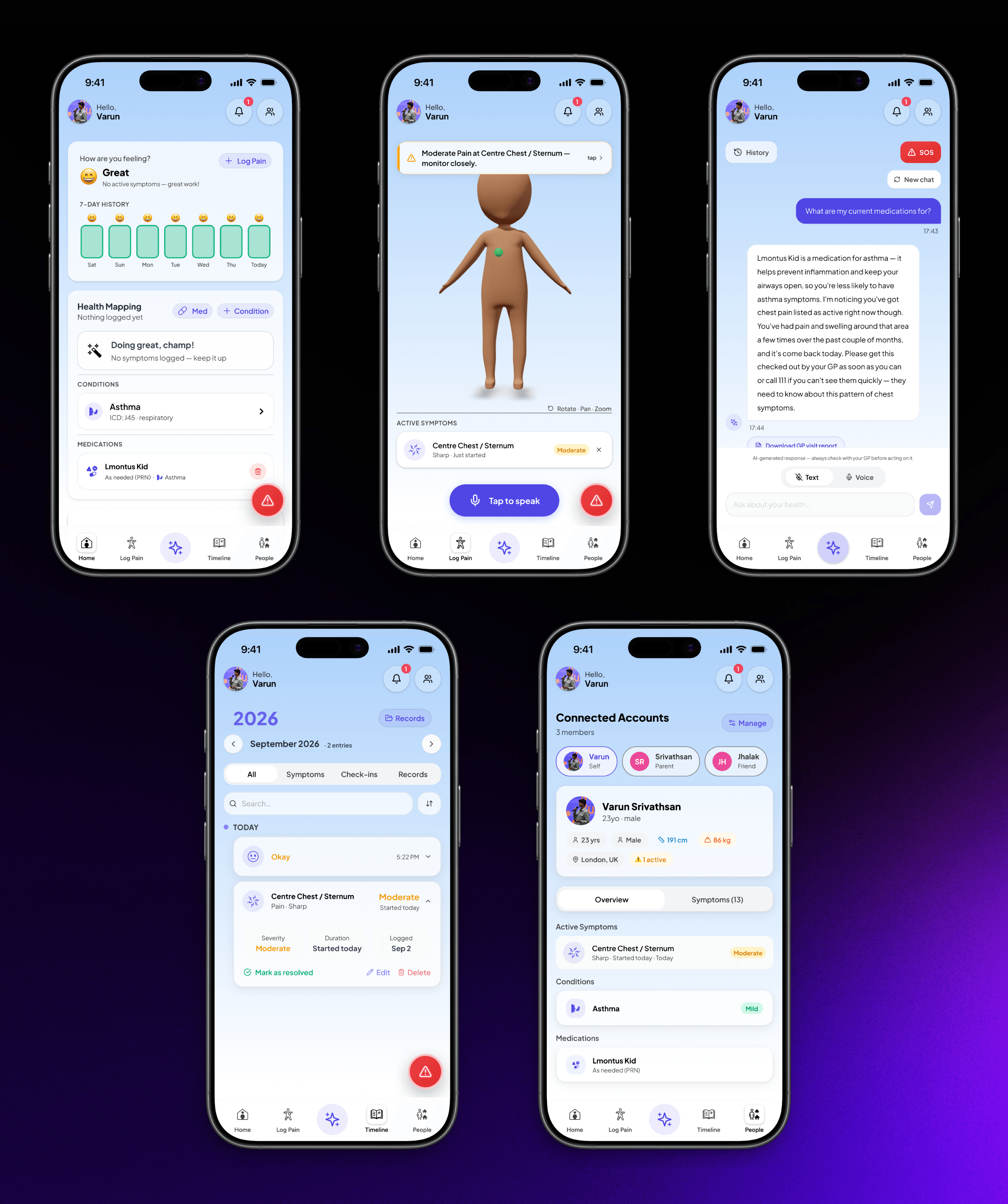
Built for the worst moment, not the demo.
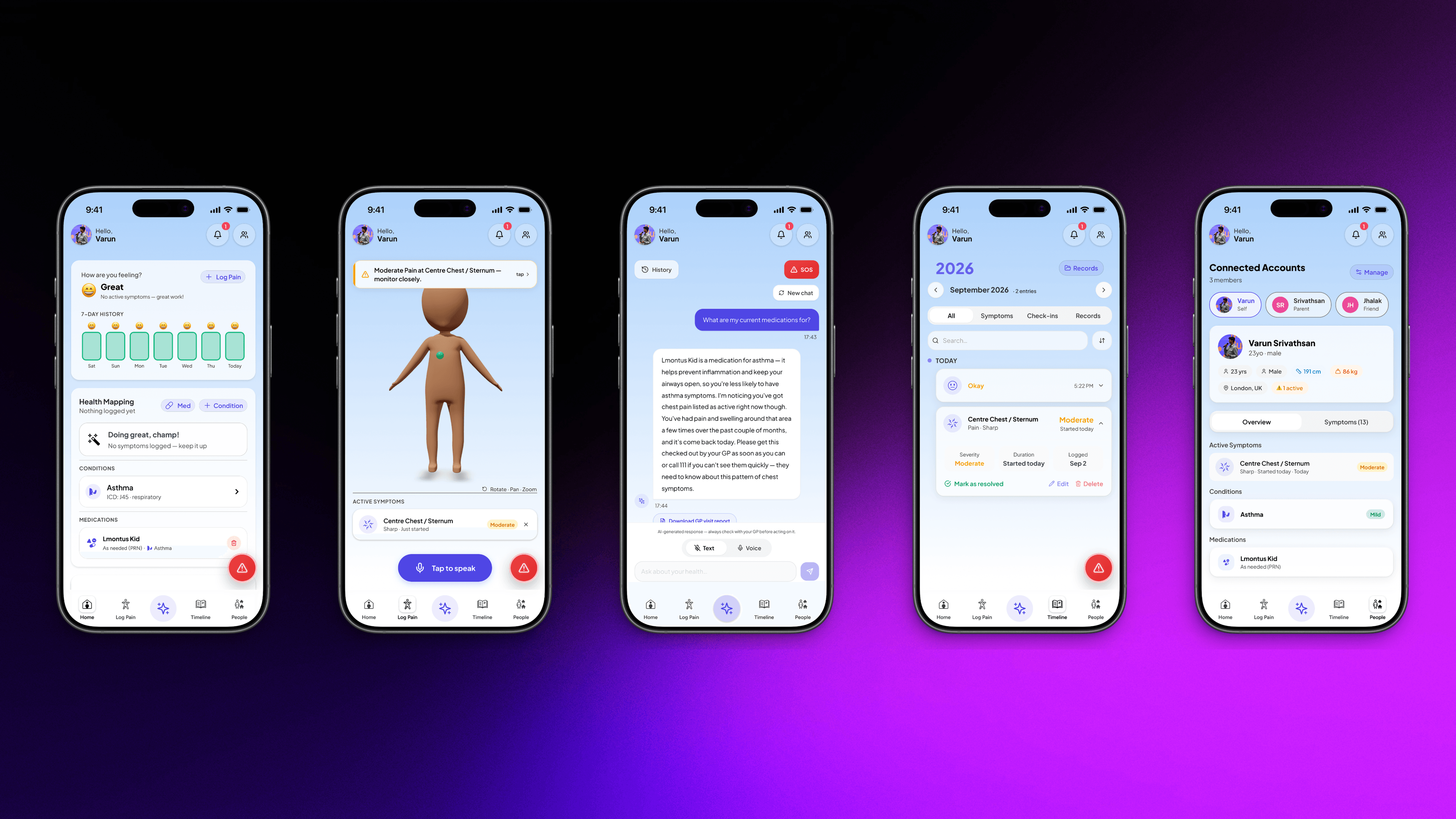
Final screens were composed from the library, with the timeline, the body map and the SOS path as the primary flows. Everything else sits behind them.
OUTCOME
In testing, and backed by the people in this field.
Kaapu runs as a web app on both platforms, with the full Android build in limited testing on the Play Store. It was validated independently by North West London GPs, backed in writing by ICHP, named in an Imperial College press release, and pitched at Apple Made for Business.
15K+
community interactions, zero ad spend
50+
patients described the problem unprompted
4
institutions backing it independently
Top 10
Products of the Week on PeerPush
Three decisions worth defending
01
Killed daily logging two weeks in
Retention fell because people who felt fine had no reason to open it. I went to the communities, heard the same thing, and pivoted rather than tuning a model that was wrong.
02
Capture by voice, not by form
Typing fails at the exact moment the product exists for. Voice tolerates pauses, coughing and half sentences in a way a form cannot.
03
A 3D body map rather than a diagram
Placing and grading pain by touch is faster than describing it, and it survives when words do not.
WHAT I WOULD CHANGE
Test the voice flow in the condition it exists for. Everything was validated calm and seated. I still do not know how it performs when someone is genuinely breathless, which is the only test that counts.
© Varun Srivathsan
LinkedIn